

By emangalagiu / Dec 30
Ftc.co asks Will Standridge ‘What does it mean to be “For the Church”?’.
A good book timely placed in the right hands can change the course of a life and ministry. At For the Church, we believe in the ministry of good books for the sake of the Church—which is why we’re excited to present to you the 2025 For the Church Book Awards. For our ninth annual FTC Book Awards, members of our FTC council, editorial staff, and seminary community chose two books—a winner and a runner-up—to honor and to recommend to you for the way they impacted them personally and/or offered a significant contribution to the Church and her pursuit of a gospel-centered life and ministry.
Congratulations to this year’s winners of the 2025 For the Church Book Awards!
Dr. Jason K. Allen, President of Midwestern Seminary and FTC Editor-in-Chief
Winner: A Light on the Hill: The Surprising Story of How a Local Church in the Nation’s Capital Influenced Evangelicalism by Caleb Morell (Crossway)
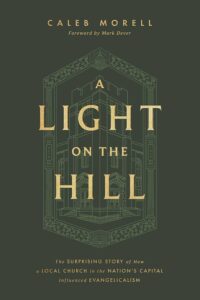 “Admittedly, I have a bias towards local-church histories, finding each and every local-church’s story fascinating. But Caleb Morell’s A Light on the Hill: The Surprising Story of How a Local Church in the Nation’s Capital Influenced Evangelicalism proved especially gripping to me, and will prove encouraging for every minister who reads it. Morell details the 150-year story of Capitol Hill Baptist Church in well researched but easy-to-read prose, grippingly telling the story of one of America’s most influential churches. The attentive reader will find lessons for local-church ministry sprinkled throughout but will also find the culminating chapters, which focus on the long, fruitful tenure of pastor Mark Dever, particularly of interest. The book is a reminder of how influential one church, strategically placed and biblically led, can be and how impactful one pastor, through one church, can impact multiple generations of ministers.”
Get the book here.
Runner-Up: 40 Questions About the Trinity by Matthew Emerson and Lucas Stamps (Kregel)
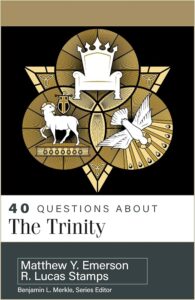 “The past decade has witnessed non-stop Trinity dialogue and debate in much of evangelicalism. Much of that discussion has trickled down to the local church level, prompting church members to rediscover ancient, essential doctrines. Along these lines, the 40 Questions Series, capably edited by Benjamin Merkle, has served the church well by answering commonly asked questions in well informed, yet understandable terms. Matthew Emerson and Lucas Stamps’ 40 Questions about the Trinity is a helpful contribution and a welcome addition to the 40 Questions Series. All trying to sort out the contemporary Trinity conversations—or just those needing a refresher on theology proper—will be well served by Emerson and Stamps’ work.”
Get the book here.
Dr. Jason G. Duesing, Provost of Midwestern Seminary and FTC Editorial Council Member
Winner: Meet the Puritans: Revised and Expanded Editionby Joel Beeke, Randall Pederson, and Fraser Jones (Reformation Heritage Books)
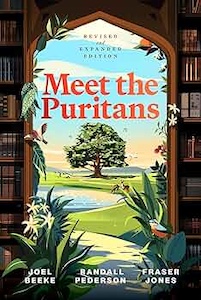 “As a perennially misunderstood group, the Puritans are in regular need of definition and introduction. The first edition of this book in 2006 served that purpose well, but when I learned the second edition contained 40% new material I knew this revised and expanded edition of Meet the Puritans would serve now as the standard resource for its intended reading audiences of pew, pulpit, and podium. The authors are like informed and enthusiastic docents greeting you at the entrance of a large museum—eager to tell you where to start and happy to share their own favorite galleries to help you make the most of your visit. Meet the Puritans is very much worth the price of admission.”
Get the book here.
Runner-Up: Prioritizing the Church in Missions by John Folmar and Scott Logsdon (Crossway)
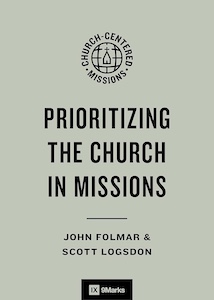 “Churches are the Bible’s missions strategy. This simple premise rings throughout this book as both a head-nodding reminder and as a chin-scratching epiphany. Written by two seasoned missionaries who pastor international, English-speaking churches in Muslim countries, Prioritizing the Church in Missions rehearses for the reader the centrality of the local church in God’s plan while also explaining why this idea is needed to bring clarity for 21st missiological practice. For anyone or any church who loves the nations, this book will prove helpful.”
Get the book here.
Camden Pulliam, Senior Vice President for Institutional Relations at Midwestern Seminary and FTC Editorial Council Member
Winner: Managing Your Households Well by Chap Bettis (P&R)
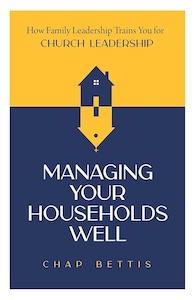 “This book is neither complicated nor clever, but its thrust is utterly consequential. The church does not need more hired-hands or professionalized parrots. No, the church needs paternal pastors. Having written my dissertation on 1 Timothy 3:4-5, I was supremely curious to read Chap Bettis’s practical exposition of these verses, and he did not disappoint. From exegetical insights to relational wisdom and experiential guidance, this book outlines how the weight of fatherhood trains men for the work of ministry. Numerous sections within the book reveal Bettis’ acquaintance with the gritty questions of daily parenting and daily pastoring – each of which are answered (or navigated) with skill and grace. I encourage any father, pastor, or man aspiring to be such to read this book, and then internalize it. May we raise more fathers who feel like a pastor, and pastors who feel like a father.”
Get the book here.
Runner-Up: Lest We Drift: Five Departures from the One True Gospel by Jared C. Wilson (Zondervan)
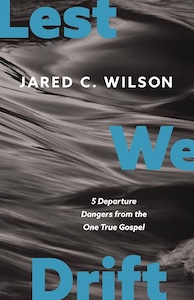 “We all have turned to look for something in the back seat while driving down the highway, only to look up again and realize the car has veered off course into danger. Dr. Jared Wilson warns of this drift in ministry too: “The moment we take our eyes off the center is when we begin to move away from it” (9). Partially a post-op on the gospel-centered movement of the past 20 years, and partially a prophetic plea with the church’s leaders of the next 20 years, Wilson exposes the dangers of drifting into victimhood, dryness, superficiality, pragmatism, and legalism. We must return, again and again, to gospel-centrality. Yes, indeed, “we must pay much closer attention to what we have heard, lest we drift away from it” (Heb. 2:1). ”
Get the book here.
Jared Wilson, Assistant Professor of Pastoral Ministry, Spurgeon College; Author in Residence, and FTC Editorial Council Member
Winner: Good News at Rock Bottom: Finding God When the Pain Goes Deep and Hope Seems Lost by Ray Ortlund (Crossway)
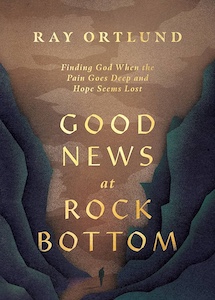 “Nobody today speaks to the heart with such pastoral grace as Ray Ortlund, and this book, while short and sweet, is nevertheless a loving stare at a deep, deep well of God’s mercy. With a scholar’s resource and a father’s tone, Ortlund guides the reader through the pains of betrayal, loss, death, and the entrapment of his or her own sins to see that the Lord who abides high on his holy hill is also down in the smoking crater, abiding with the lowly and brokenhearted. Especially for those whose life has bottomed out — but not just for them — Good News at Rock Bottom ministered to me unlike any other 2025 book I read.”
Get the book here.
Runner-Up: Drawn by Beauty: Awe and Wonder in the Christian Life by Matthew Z. Capps (B&H Academic)
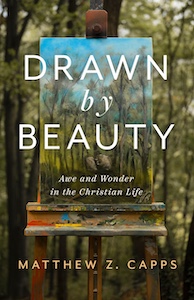 “For believers living in an age drowning in entertainment but still diminished in wonder, Matthew Capps’s Drawn to Beauty is a course corrective with deep discernment and a keen understanding of Christianity’s theological heritage of aesthetics. This book is as challenging as it is compelling, and it will draw readers into a more resonant faith, one that more gloriously adorns our glorious God.”
Get the book here.
Brett Fredenberg, Director of Marketing and Content Strategy and Managing Editor of For the Church
Winner: Union with Christ and the Life of Faith by Fred Sanders (Baker Academic)
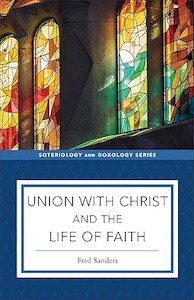 “Fred Sanders has long helped the church recover the beauty and centrality of Trinitarian theology, and in Union with Christ and the Life of Faith he offers one of his most pastorally valuable works yet. With precision and warmth, Sanders shows that union with Christ is not a niche doctrine; it is the unshakable foundation of the Christian life. He writes with a rare blend of academic clarity and everyday accessibility, inviting readers to marvel at what it means to belong to Jesus, to participate in His life, and to walk by faith in the power of the Spirit. Every chapter reminds believers that the Christian life is not grounded in self-effort but in the finished work of Christ applied to us. This book strengthens weary saints, steadies young believers, and deepens the roots of any disciple hungry to grow in grace.”
Get the book here.
Runner-Up: How to Lead Your Family by Joel Beeke (Reformation Heritage Books)
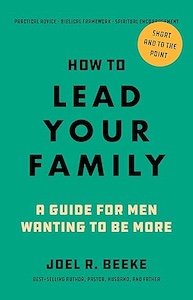 “Joel Beeke’s How to Lead Your Family is a deeply needed word for a cultural moment marked by distraction and drift. Drawing from decades of pastoral ministry and a lifetime of devotional wisdom, Beeke offers a vision of family leadership that is both countercultural and wonderfully ordinary. He refuses to reduce spiritual leadership to technique; instead, he calls parents to a life of repentance, prayer, Scripture, and intentional discipleship. With clarity and gentleness, Beeke shepherds readers toward cultivating a home shaped by grace, where parents model what they teach, where worship becomes a pattern of life, and where children are invited into the rhythms of the Christian life. This book is both convicting and hope-giving, offering practical steps without ever losing sight of the gospel that empowers them. It is a resource every Christian parent, pastor, and church leader should keep close at hand.”
Get the book here.
Jonathan Lumley, Associate Editor at For the Church
Winner: Numbers 20–36 by L. Michael Morales (Apollos)
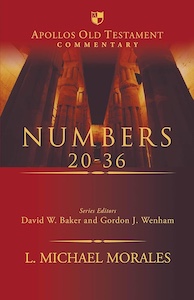 “The second volume of Morales’ commentary on Numbers brings readers into Israel’s wilderness journey with clarity and insight. Morales carefully unpacks the Hebrew text and the book’s structure while highlighting moments of challenge, faithfulness, and God’s guidance that speak directly to life today. His exposition is both thorough and approachable, making this a resource that pastors, students, and everyday readers can use to engage the text thoughtfully and faithfully.”
Get the book here.
Runner-up: Prioritizing Missions in the Church by Aaron Menikoff and Harshit Singh (Crossway)
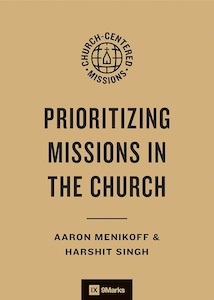 “This book is the counterpart to Prioritizing the Church in Missions, providing a helpful, much-needed guide for making missions central to your church’s culture. Menikoff and Singh show how practices like preaching, prayer, discipleship, and community can naturally support sending and sustaining missionaries. Grounded in Scripture and pastoral experience, it argues that missions isn’t just a program or parachurch work but should be woven into the heartbeat of every congregation. Whether you are a missionary, pastor, leader, or member, this book offers practical, biblical guidance for aligning your church with God’s heart for the nations.”
Get the book here.
Levi Moore, Manager, Sword & Trowel Bookstore and Tomlinson Cafe
Winner: A Heart Aflame for God: A Reformed Approach to Spiritual Formation by Matthew Bingham (Crossway)
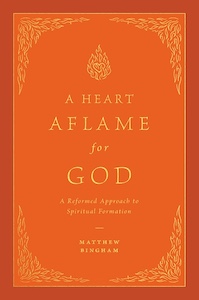 “Never has it been easier for the glint and glimmer of this world to steal our gaze from the God who redeemed us. Our natural inclination in fighting this distraction is to try harder, as if doing more will rekindle a heart grown cold. Matthew Bingham reminds us otherwise: only the Holy Spirit, through reading, praying, and pondering the illuminated Word, can set us ablaze from within. This formation from within is critical for the local church as we are “living stones…being built into a spiritual house, to be a holy priesthood” (1 Pet. 2:5). A heart kept aflame for God during the week stokes the flames of corporate worship, offering a pleasing aroma to the Lord.”
Get the book here.
Runner-Up: Remember Heaven: Meditations on the World to Come for Life in the Meantime by Matthew McCullough (Crossway)
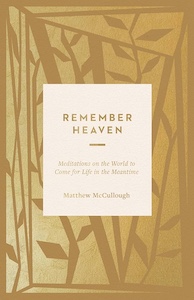 “Only the hope of heaven is big enough for a world that never will be. Yet we have become masters of drowning our aches and longings for more in vain and unfulfilling distractions. It is with forceful tenderness that Matthew McCullough presses the hope of heaven into our wounded longings and shows that the new creation is the only answer big enough for hearts that were made for eternity. A church that truly remembers heaven will live differently now and preach a gospel that finally feels like Good News.”
Get the book here.
Once again, we would like to extend a congratulations to the authors and publishers represented in the 2025 For the Church Book Awards. You can view previous winners of the FTC Book Awards here: 2024, 2023, 2022, 2021, 2020, 2019, 2018, 2017.