








Latest Resources

Defending Complementarianism Without Diminishing Women
When Conviction Is Communicated Without Care Dear brothers, honor your sisters. In recent years, many pastors have found themselves in difficult positions and conversations as they seek to defend conservative biblical doctrine. In defending and holding to such doctrines, these shepherds are doing what they are called to do: Protect the sheep of God’s flock. […]

Celebrity Christians
Should “Christian celebrity” even be a thing? How should we think about Christians and fame? How should we think about the concept of public ministry and platform? On this ep of the FTC Podcast, Jared Wilson and Ronni Kurtz discuss the challenges — and potential — of Christian celebrities and Christian celebrity culture.

What Does It Mean to Be Poor in Spirit?
Vs. 3: “Blessed are the poor in spirit, for the kingdom of heaven is theirs.” Luke’s first beatitude is “blessed are the poor” (Luke 6:20). Some have argued that Luke and Matthew are at odds because, in Matthew’s Gospel, Jesus adds the words “in spirit.” In the Old Testament, there is a frequent connection between […]

Church Planter, Be Happy
I used to be a church planter. Maybe I still am. I don’t know. All I know is that the church I planted more than a decade ago is no longer a church “plant.” It is an established church with elders, staff, property, and long-term plans for disciple-making. I am also no longer there. A […]

Meeting Christ in the Wilderness: Seasons of Waiting, Pain, and Uncertainty
Every Christian eventually experiences seasons they would never choose. Some walk through chronic illness. Others bury loved ones, endure loneliness, face disappointment, or wait for answers that seem slow in coming. There are moments when life seems to stand still and prayers appear to go unanswered. During these difficult seasons, believers often ask a similar […]
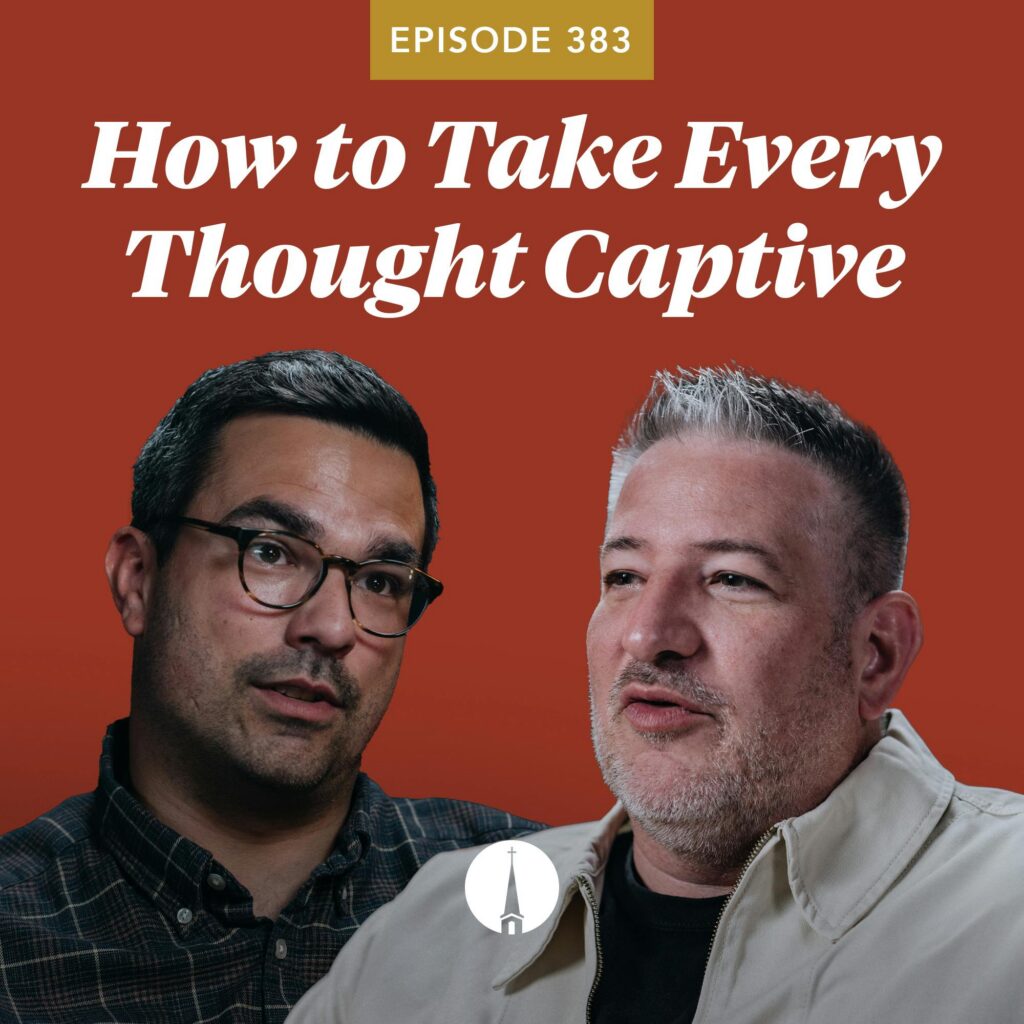
How to Take Every Thought Captive
The phrase comes from 2 Corinthians 10:5 — “taking every thought captive to the obedience of Christ.” But what does it mean? And how do we do it? In this episode of the FTC Podcast, Jared Wilson and Ronni Kurtz discuss how to cultivate a Christ-captivated imagination.

The Death of Religion?
Two major storylines have dominated news coverage of American religion in recent years. One is the decline of Christianity. Writers have often based this theme on Pew Research Center reports about the rise of the “Nones,” or people who say they adhere to no religion in particular. One Pew headline, for example, declared, “In U.S., […]

What Makes a Life Radical?
I was discipled into what I call the “radical movement.” The year I went to college for a year-long missions program was the same year David Platt’s Radical was published. What had been building up in my heart—a desire to serve “the least of these” and go to the mission field—was fueled by not only […]

Theology For Life
Why do we experience such distance between the idea of doctrine and delight? Why do we insist on a separation between learning doctrine and practical life? This week Jared Wilson talks to Ronni Kurtz about Ronni’s new book Theology for Life: A Joy-Filled Introduction to Christian Doctrine (Baker Books) releasing this week. Theology for Life […]

When Theology Fails to Form Us
There are many ways theology can be misused and abused.[1] Given this book aims to see doctrine as an avenue for delight, articulating ways theology and doctrine may be used for ill may prove helpful and can give us a diagnostic for the way theology moves us in our own time spent contemplating the Lord. […]