

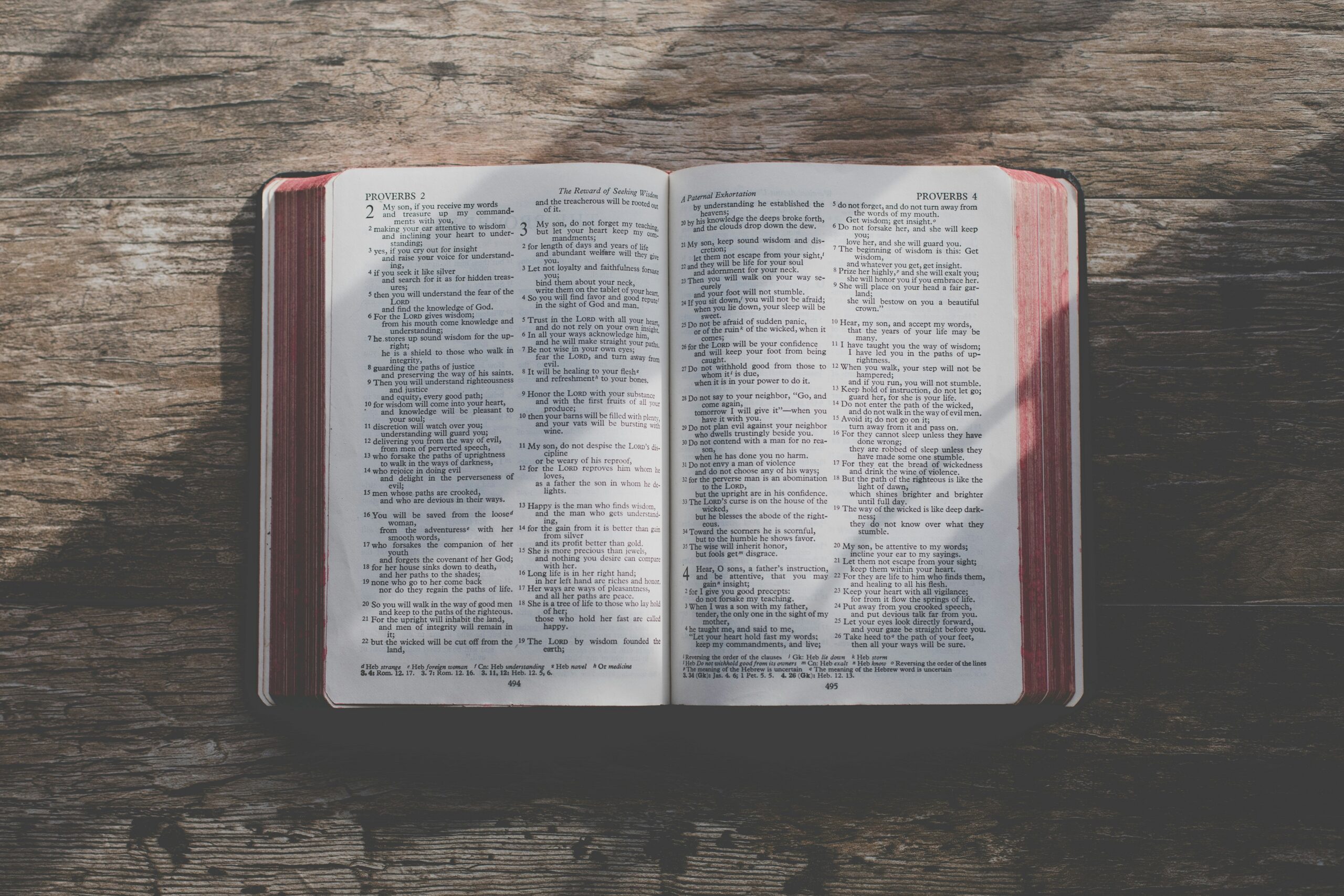
Have you ever heard a sermon that explained what a biblical text meant in its original context, showed how it pointed to Christ, challenged you to live differently, and encouraged you with the hope of heaven? If so, you’ve encountered something remarkably similar to how Christians read the Bible for centuries.
Though the medieval four senses of Scripture are often viewed with suspicion or scorn, they essentially tell readers to ask four questions of every text. I think these are helpful questions and can be employed to help train people to read the Scriptures in all their fullness.
Before I enumerate these questions, let me describe the four senses. The four senses historically have been described as the literal (historical or grammatical), allegorical (Christological), tropological (moral), and anagogical (futuristic).
- The literal sense refers to the most natural sense of the words in their grammatical and historical context which will be discovered by sound exegesis.
- The allegorical sense refers to symbolic readings with Christ and the church in view.
- The tropological sense is another spiritual sense but narrows the focus to the formation of the church and persons in the church.
- The final spiritual sense is the anagogical sense. This pertains to what is to come, what we are hoping for, and our ascent to God.
The Four Questions
Some might think it is better not to use these terms, especially since allegory is viewed with such negativity in the modern era. If we can get past the difficult language, one of the strengths of the four senses is the simple and intuitive nature of it. Many Christians naturally read the Scriptures in this way, even if they get things out of order. The quadriga essentially teaches readers to ask four questions of the text:
- What does the text mean in its original setting?
- How does the text point us to Christ and the church?
- How does the text form us as a people and give us instructions for how to live?
- How does the text point us to our glorious future and Christ’s return?
The Four Questions Expanded
The first question is concerned with authorial intent, genre, grammar, history, and the literary flow of the passage. It seeks to bridge the divide between modern culture and the biblical text. Readers should be aware that biblical books come from an ancient author and are written to a particular audience about specific issues.
The second question broadens the scope and asks larger questions about the storyline of the Scriptures and how it culminates in Christ and His church. There are multiple ways to think of how the story progresses, but one helpful way to think of the story is through two simple statements. The narrative structure of the Bible proceeds through covenants and the thematic structure revolves around the idea of Kingdom. Each text has some connection to this reality, and readers should look not only at the individual passage but also at the larger salvation-historical context.
The third question is one many Christian readers begin with, but it should only be asked after the first two have been examined. Readers can and should ask what the text means for them as the Scriptures are a divine word addressed to them. However, they should only ask this question once they have discerned what it meant in its original context and how the gospel informs our understanding. Then one can ask how it forms us individually and as a community.
The final question is one that many Christians forget to ask. The biblical storyline doesn’t simply culminate in Christ’s first coming, but the story will come to completion at His second coming. Therefore, readers should ask how the text points to them to the hope of Christ’s second coming. Reading with the larger biblical storyline includes reading with the word “Maranatha” always on our lips.
Reading in Community
These four simple questions can be employed by any Christian. They are easy to remember, and they keep us grounded in the original meaning without forgetting the larger storyline. Sometimes people wonder what guardrails we have for these questions so people don’t misinterpret Scripture. This is a good question, and this article doesn’t have time to address all the guardrails we should employ. However, one can be mentioned here, and it is the best one: the church. If we read with others, they can help us see where we might be misunderstanding the text. Many think of reading the Scripture only in individualistic terms, but reading is a communal event.